
Check the Washington County Owner of Record
Start any owner check with the Washington County Appraiser. One parcel record there ties together the situs, the assessment description, the classification, and the owner or taxpayer entry. The county's online application is not consistently available, though. Its exact fields and refresh schedule are not published. Treat the table as a list of fields to request or verify, not a promise of what appears online.
| Owner or taxpayer name | The assessment-side name associated with the parcel |
|---|---|
| Mailing address | Where assessment or tax correspondence is directed |
| Situs address | The physical-location label, when assigned |
| Legal description | The lot, block, subdivision, or section language used to match records |
| Parcel identity | The administrative key connecting assessment information |
| Sale or deed clue | A date or reference that must be checked against the recorded instrument |
None of these fields proves occupancy. The mailing address may belong to an owner, an entity, a trustee, a representative, or a servicing address outside Washington County. Match the legal description before treating any name as the owner of the same land. The official Appraiser page leads to the current parcel-record route.
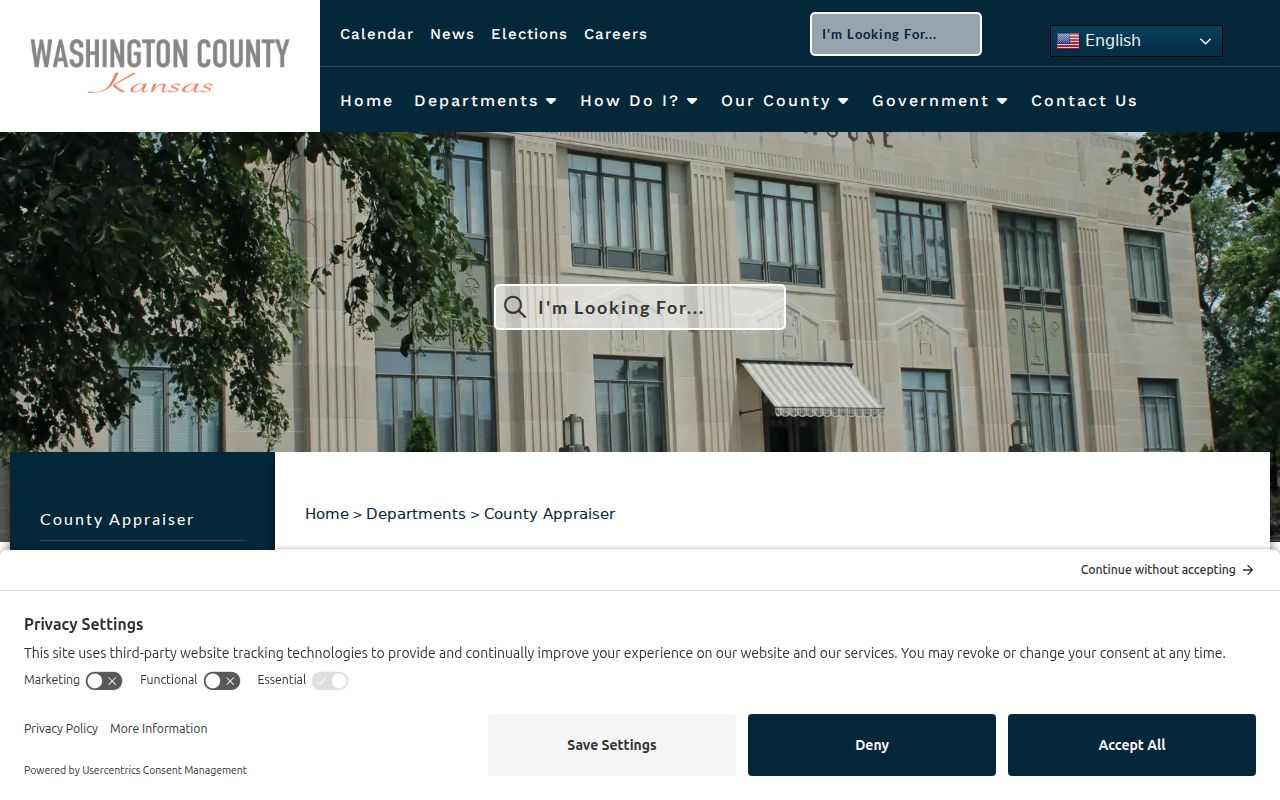
This capture identifies the assessment custodian, not a certified title result.
Measure How Current the Washington County Roll Is
The Appraiser values real property as of January 1 each year and maintains assessment records, but the research did not establish a typical number of days between recording a sale and updating an owner field. A just-recorded deed can therefore be newer than an assessment-side name. Ask the Appraiser which valuation year and update date apply before relying on the roll.
Recent-sale gap. The roll can lag a conveyance. When dates conflict, inspect the newest qualifying recorded deed and verify that it covers the same legal description.
A newer instrument is not automatically a conveyance. Mortgages, liens, releases, easements, and assignments can post after the owner's deed. Read the document type, not just the date. The granting language tells you what actually moved.
Verify the Current Washington County Owner
Confirm current ownership with the Register of Deeds record.
- Search the county-linked Parcel Search, or contact the Appraiser if the page fails.
- Copy the name and full legal description, including lot, block, subdivision, township, section, and directional fractions.
- Search the name as grantee and the tract description through Tapestry.
- Open the newest qualifying deed, affidavit, administrator's deed, or court-sale deed and match the entire tract.
- Check for a later conveyance and note whether an entity or trustee holds the interest.
- Owner of record
- The party shown by the relevant operative public record.
- Assessment roll
- The Appraiser's valuation and classification record, maintained for property-tax administration.
- Situs and mailing address
- The property's location label and the separate destination for official correspondence.
- Recording lag
- The interval between an instrument entering the deed record and another system reflecting the change.
Recognize the Instrument That Changed the Owner
A deed is not the only path to ownership. Current title can follow an affidavit, a survivorship instrument, an executor or administrator deed, or a court-sale deed just as surely. The Register records deeds, liens, affidavits, plats, and easements. Document type matters when sorting recent hits.
Some Kansas deeds require a sales validation questionnaire that supports the transfer workflow. It never replaces reading the deed itself. For probate-linked ownership, search Kansas CaseSearch and contact the Washington County District Court clerk when a court order explains the conveyance.
Confirm an Entity Named as Current Owner
An LLC or corporation grantee needs one more check. Search the exact name in the Kansas Secretary of State Business Entity Search. It accepts a business name, a Kansas SOS business ID, or a resident-agent name. Results cap at 200. Status and resident-agent data help separate lookalike names.
Remember, the associated person is not the property owner. The deed names the entity, and a trust may appear only through its trustees or trustee capacity, so retrieve the instrument rather than inferring beneficiaries or ownership from a contact address.
Check a Split or Merge Before Naming the Owner
Splits and merges complicate any owner check. A parcel split, merge, corrected description, or annexation can leave the current Appraiser record and an older deed describing different footprints. Match lot and block or section calls first. Acreage or a street number alone can mislead, and if only part of a tract moved, retrieve the plat, survey, or later description that defines the resulting parcel. Washington County publishes no interactive parcel GIS tool. The county maps page supplies city, school, cemetery, township, and commissioner geography. Those maps cannot replace the recorded description.
Watch for a Later Recording Under the Owner Name
The Register of Deeds offers Property Fraud Alert free of charge. Enrollment can notify an owner when a document is recorded under a selected name. It does not block the filing. Nor does it certify fraud, so let any alert push you toward the actual instrument.
Remote Tapestry searching costs $6.95 with image viewing included. Printed pages cost $1. The Register also provides counter, telephone, and mail access at 214 C Street, Washington, KS 66968, or 785-325-2286, Monday through Friday from 8:00 a.m. to 5:00 p.m.
Contact a Washington County Owner Carefully
Use official channels to reach an owner. For a legitimate property matter, write to the mailing address in the official parcel record or the registered office of an entity. Address the exact recorded party. Name the parcel and your reason for writing, never assuming the recipient lives there or chasing unrelated personal details. A returned letter means recheck the record date.
Lawful use. Current-owner records support purchase inquiries, boundary questions, estate work, and civic transparency. Never use owner information to stalk, harass, intimidate, or harm a person.
The current-owner trail ends with today's record. To trace who held the tract before, use the former owners guide. For the broader address-to-owner method, see who owns this property.